In January 2021, when the pandemic was escalating, 12-year-old
Maryam Jameela, together with her father and brother, came up with
an inspiring grassroots movement, “The Neighbourhood Library”.
Maryam, who had always been an avid reader since childhood, thanks
to her father’s bookstore, realised that children were being raised
with more screen time than book time. She, along with the help of
her father, Mirza Abdul Qayyum Nadvi, and brother, Mirza Abdul Hasan
Ali, decided to do something for the kids in their area to instil a
love for reading in them.
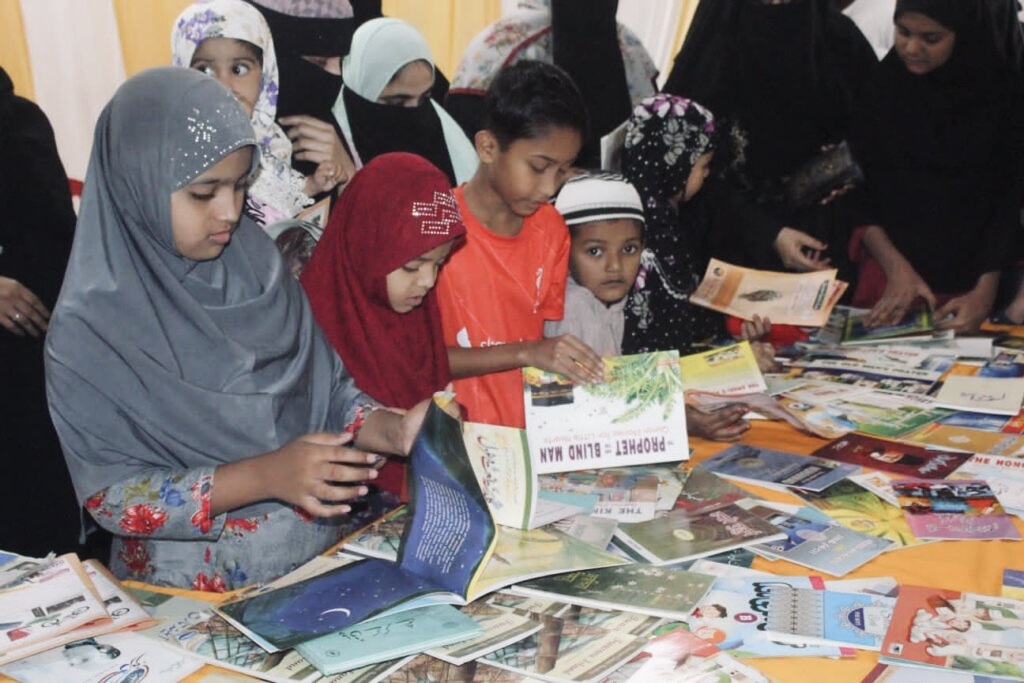
The first libraries were established in almirahs with 300 to 400
books in parking lots, mosques, temples, and residential lawns.
Today, the movement has expanded to 36 libraries in Aurangabad, and
more in Hyderabad, parts of Madhya Pradesh, and Kashmir.
According to Ali, the movement was started without any expectations,
only with the hope that children would have something to read.
However, over five years, the libraries have brought about a marked
change, especially in the area of leadership training. In some
areas, children have come forward on their own to manage the
libraries as “young librarians.” Without any staff members, these
children are in charge of managing the books and lending them out.
Plans are afoot to give them a small salary every month and training
in basic record-keeping to give them confidence. The movement
specifically encourages girls, including Muslim girls, to take up
this task as a step towards empowerment.
Talking about the library as an open, free, and inclusive space, Ali
said, “The library is for marginalised groups, especially children
and Muslim women. Incidents such as the removal of a woman’s hijab
in public send a negative message to society and discourage women.”
He further added, “It creates fear and uncertainty among
marginalised groups who are already under constant social pressure.
This initiative aims to provide access to books, opportunities, and
a safe space every day to slowly work towards reducing the fear of
exclusion and encourage participation with confidence.”
The team plans to establish 26 additional libraries this year in
collaboration with communities, NGOs, and individuals. However,
securing space remains a huge difficulty, as the initiative does not
pay rent and relies on residents willing to provide modest spaces
for libraries. Staffing is also limited due to a lack of
institutional funding, with most centres maintained by volunteers,
including close friends and local supporters. Though not a
registered NGO, the project continues as a community-driven effort,
with hopes of formalising hiring and training processes if funding
becomes available.
Each library houses children’s literature, picture books, and
biographies in Marathi, Hindi, Urdu, and English. The library
remains open 24/7 and without locks; the libraries operate on mutual
trust within the community. Ali acknowledged that some books may be
damaged or lost, but this was part of the process of maintaining
access without restriction. He also pointed out that the collection
is made up mainly of inexpensive children’s books, and that the
overall goal is to achieve justice in access.
Using his experience in social work and with UNICEF in the area of
child protection and mental health, Ali has strived to make the
libraries a safe and welcoming environment. The project has now been
extended to over 10,000 children. Children who once lacked access to
books have gone on to confidently speak with journalists from
outlets such as Aaj Tak and BBC. Ali said the collective growth in
children’s confidence and curiosity stands as the project’s greatest
success.
He added that communities need not wait for large organisations to
act. Even a small shelf of books, he said, can become the foundation
of change if communities are willing to adopt, critique, and expand
the idea themselves.
The Neighbourhood Library: A Community of Young Readers
FEBRUARY 19, 2026
prompt: CIA 2 - interviewing a social activist